
Hire one professional vehicle sized to your actual route and headcount, and you will protect your timeline better than any other single decision you make. Before you call a single vendor, do three things: confirm your exact headcount (including groomsmen transportation needs), map every fixed point on the day, and request vehicle exterior dimensions from any provider you are considering. One shared ride keeps the group together, cuts coordination overhead, and gives you a private window before the ceremony that no amount of individual rideshares can replicate.
Your 10-minute starting checklist:
- Confirm headcount — count every person who needs a ride, not just the bridesmaids
- Map fixed points — ceremony entry time, venue access windows, photo permit locations, reception load-in
- Request vehicle specs — exterior dimensions, turning radius, and driver staging instructions from each provider you contact
Table of Contents
- What vehicle works best for your bridal party size?
- How do you plan the route and build a realistic timeline?
- Who pays for wedding party transport, and what does it cost?
- What should you confirm before signing a transportation contract?
- Sample day-of timelines you can copy and customize
- Why a professional chauffeur service is the dependable choice
- Key Takeaways
- The planning mistake that costs couples the most time
- Shermaine's Limo & Executive Logistics handles the logistics so you don't have to
- Useful sources and further reading
What vehicle works best for your bridal party size?
Matching the vehicle to the route is the first real decision, and logistics pros say the most common planning mistake is doing it backward: couples fall in love with a vehicle and then try to force the itinerary around it. Start with your fixed points, then select the vehicle.
| Vehicle Type | Best For | Typical Capacity | Cost Shape | Pros | Cons | Venue/Parking Notes |
|---|---|---|---|---|---|---|
| Executive sedan / luxury SUV | Couple or small VIP group | 2–6 | Hourly or flat | Elegant, easy to park, photo-ready | Too small for full party | Fits almost anywhere |
| Sprinter van | Bridal parties of 10–14 | Up to 14 | Hourly | Elevated feel, garment hooks, one shared ride | Less "party" atmosphere | Fits most hotel lots; confirm clearance |
| Minibus | Parties of 15–24 | 15–24 | Hourly or flat | Comfortable, AC, luggage space | Less glamorous exterior | Needs wider staging area |
| Full-size motorcoach | Guest shuttles, 30+ | — | Flat or per-trip | High capacity, efficient loops | Difficult in narrow/historic streets | Requires large staging zone |
| Party bus | Larger bridal parties wanting a celebration vibe | Up to 30 | Hourly | Sound system, LED lighting, dance floor | High cost, wide turning radius | Confirm lot size and clearance |
| Vintage / classic car | Couple's send-off or photo moment | 2–4 | Flat or hourly | Stunning photos, memorable | Unreliable mechanically, no AC | Narrow streets fine; no cargo space |
| Trolley | Large parties wanting a novelty ride | — | Flat | Fun aesthetic, open-air option | Weather-dependent, slow | Needs flat terrain and wide roads |
A Sprinter van is often the sweet spot for smaller bridal parties of roughly 10–14 people: it offers an elevated feel, dedicated garment hooks, and fits the hotel-to-ceremony-to-reception flow without the logistical weight of a full coach.
On cargo space: Plan for garment bags, spare shoes, and touch-up kits when selecting a vehicle. A cluttered cabin creates photo problems and adds stress at every stop. Assign a specific vehicle or secured area to hold that gear so the passenger cabin stays clean.
Photogenic vs. practical trade-off: A vintage car is a beautiful photo prop for a two-minute send-off shot. It is a poor choice as the primary transport for eight people on a 90-degree July afternoon with no air conditioning and a tight timeline. Use it as a secondary vehicle for the couple's exit, not as the workhorse of your wedding party transport plan.

How do you plan the route and build a realistic timeline?
Map your fixed points before you think about vehicles. Fixed points are the moments that cannot move: ceremony start time, venue access windows, photo permit slots, and vendor arrival times. Everything else bends around them.
Step-by-step route planning process:
- List every location — getting-ready spot, ceremony venue, photo locations, reception venue, after-party if applicable
- Identify hard stops — ceremony start time, venue curfews, permit windows, vendor call times
- Measure transit times — drive each segment at the same time of day as the wedding, or ask your driver to do so one to two weeks before the event
- Add loading time — plan 10–15 minutes for a small group, 15–25 minutes for a larger one; add more for high-rises or buildings with elevators
- Apply buffers — industry pros use 15–20 minute buffers per transition, not 5; a 5-minute buffer evaporates the moment someone cannot find their boutonniere
- Assign staging areas — designate one gathering spot at each location so the driver is not waiting while you hunt for missing passengers
- Write driver instructions — entry gate, staging position, contact person's name and cell number
Where delays actually happen: elevators in downtown hotels, last-minute dress adjustments, a missing ring bearer, and the groomsmen who stepped outside for air. Buffer time is not wasted time. It is what keeps a 10-minute delay from becoming a 45-minute cascade.
Communication plan: A one-page timeline sent to drivers, coordinators, and the wedding party one week before the wedding prevents most day-of confusion. It should include times, pickup points, vehicle assignments, and the point person's contact information. On the day itself, that point person handles all "where's the bus?" texts so you do not have to.
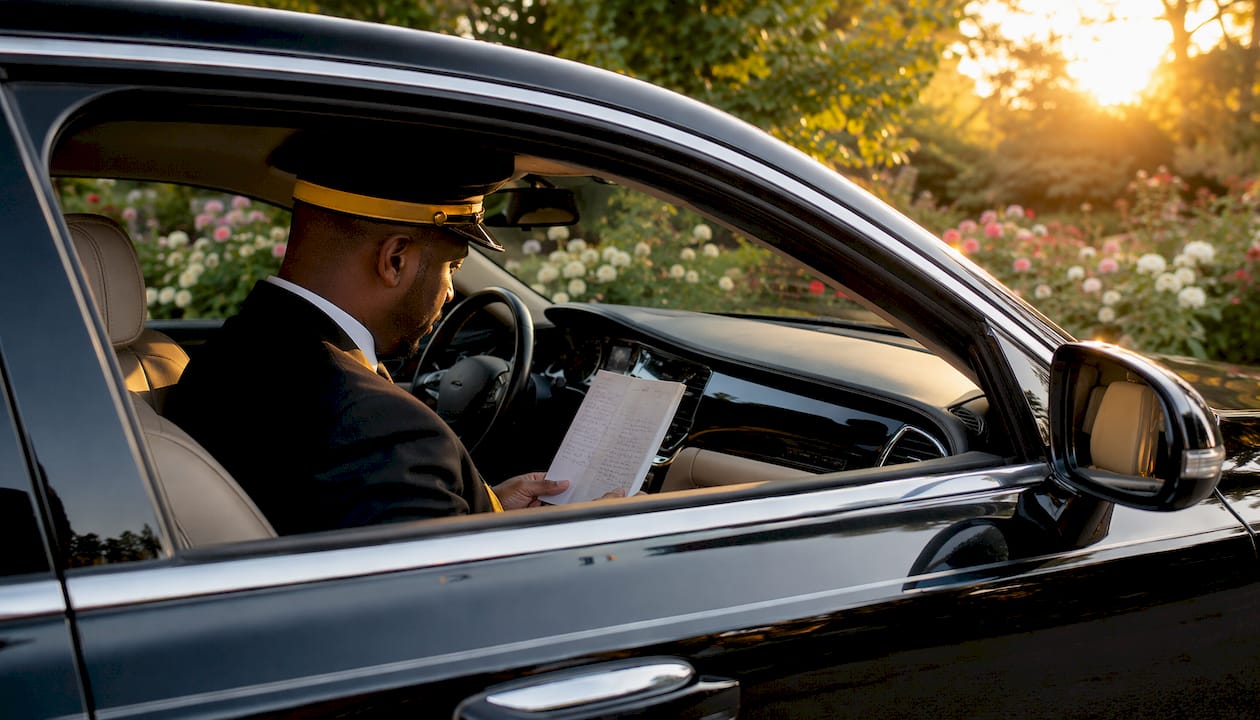
Pro Tip: Test-drive the route at the same time of day as your wedding, one to two weeks before. Traffic patterns at 4:00 PM on a Saturday are different from a Tuesday afternoon. If your driver offers to do a route check, take them up on it.
Who pays for wedding party transport, and what does it cost?
The couple or their families typically cover professional transportation for the bridal party. Bridal-party members rarely pay their own way on the wedding day, and asking them to do so is generally considered poor form. Guests are a different story: shuttle services for guests are common, but the expectation that guests cover their own transport to and from the venue is also widely accepted.
Typical cost shapes by vehicle type (U.S. market; ranges vary by region, season, and operator):
- Luxury sedan / SUV: $75–$150/hour, often with a 2–3 hour minimum
- Sprinter van: $100–$175/hour, typically a 3–4 hour minimum
- Minibus (15–24 passengers): $125–$200/hour
- Party bus (up to 30): $150–$300/hour
- Full-size motorcoach: $800–$1,500 flat for a half-day or per-trip pricing for shuttle loops
Transportation typically runs 2–4% of the total wedding budget, with combined services for a mid-range wedding often totaling several thousand dollars once gratuity and fees are included.
Deposit and contract norms: Most professional operators require a deposit of 25–50% at booking, with the balance due before or on the day. Cancellation windows vary, but 30–60 days is common for a full refund; cancellations inside that window often forfeit the deposit. Always confirm overtime rates in writing before you sign.
Gratuity: U.S. industry standard for chauffeur gratuity is 15–20% of the total fare. Some operators include it in the contract; others leave it to the client. Ask upfront so it does not catch you off guard at the end of the night.
Pro Tip: If parents or grandparents are traveling to the ceremony from a hotel, consider adding them to the bridal-party vehicle or booking a separate sedan as a surprise. It costs relatively little and removes a real logistical worry for people who may not be comfortable with rideshare apps.
What should you confirm before signing a transportation contract?
Book transportation 6–12 months in advance for a typical wedding, and earlier for peak-season dates or specialty vehicles. Once you have a shortlist, the contract review is where most problems get caught or missed.
Contract and booking checklist:
- Photos of the exact vehicle you are booking (not a stock photo of the model)
- Exact hours covered, overtime rate per 30 or 60 minutes, and how overtime is triggered
- Cancellation and refund terms in writing (see the refund policy for how Shermaine's handles this)
- Deposit amount, due date, and payment method
- Backup vehicle clause: what happens if the primary vehicle has a mechanical issue
- Proof of commercial passenger transport insurance and licensing
- Driver background check confirmation or chauffeur certification
- Staging instructions: entry gate, load-in dock, contact person on site
Venue and parking confirmations: Large vehicles frequently cannot fit narrow lots, low clearances, or historic streets. Confirm exterior dimensions and turning radius with your provider, then cross-check against the venue's loading zone, any low-clearance structures, and the width of access roads. Do this before you sign, not the week of the wedding.
Vendor coordination: Share your transportation timeline with your photographer and wedding coordinator at least two weeks out. Your photographer needs to know when the bridal party arrives for staged shots; your coordinator needs vehicle arrival cues for announcement timing. A 20-minute shuttle loop for guest transport works well when it is communicated clearly, but guests need to know departure times, boarding locations, and whether the shuttle runs continuously or on a fixed schedule.
Red flags to watch for: A vague contract with no overtime rate, a provider who cannot supply proof of insurance, or an operator who refuses to confirm vehicle dimensions are all reasons to keep looking.
Sample day-of timelines you can copy and customize
Three templates cover the most common wedding flows. Adjust times to your ceremony start and transit distances.
Template 1: Single venue, first-look included
| Time | Action | Notes |
|---|---|---|
| 10:00 AM | Driver arrives at getting-ready location | Driver confirms staging area and contact person |
| 10:15 AM | Load garment bags, cargo, accessories | Assign one person to manage loading |
| 10:30 AM | Depart for first-look location | 15-min buffer built in |
| — | First-look and wedding party photos | Set a hard end time |
| 12:00 PM | Depart for ceremony venue | Arrive 30 min before ceremony start |
| 12:30 PM | Bridal party arrives, stages for entry | Driver holds at staging area |
| 3:30 PM | Ceremony ends; load for reception | 20-min buffer for family photos |
| 4:00 PM | Depart for reception | |
| — | Final guest shuttle departure | Set 2–3 departure windows for return trips |
Template 2: Separate venues, no first look (traditional)
| Time | Action | Notes |
|---|---|---|
| 12:00 PM | Driver arrives at getting-ready location | Confirm staging and cargo plan |
| 12:15 PM | Load and depart for ceremony | 20-min buffer for loading |
| 1:00 PM | Bridal party arrives at ceremony | 30 min before start time |
| 3:30 PM | Ceremony ends; guests depart first | Stagger: guests to cocktail hour, party stays for photos |
| 4:30 PM | Wedding party departs for reception | After portraits complete |
| — | Couple's send-off vehicle staged | Confirm staging 30 min before |
Template 3: Destination or large-party flow with guest shuttles
| Time | Action | Notes |
|---|---|---|
| — | Bridal party vehicle departs hotel | Sprinter or minibus |
| 10:00 AM | Guest shuttle loop begins | 20-minute loop from hotel to venue |
| 1:00 PM | Ceremony begins | All guests and party on-site |
| 3:00 PM | Ceremony ends; shuttle loop resumes | Guests to cocktail hour location |
| 10:00 PM | First return shuttle departs | For families and early departures |
| — | Second return shuttle | Main guest wave |
| 12:00 AM | Final return shuttle | Late-night group |
Editable checklist items for any template:
- Point person name and cell number
- Driver name, cell number, and vehicle plate or ID
- Vehicle assignment list (who rides in which vehicle)
- Troubleshooting protocol: if the group runs 15+ minutes late, the point person calls the driver immediately to adjust staging
Why a professional chauffeur service is the dependable choice
Rideshare services are unreliable for tight wedding-day windows. Drivers can cancel, arrive at the wrong entrance, or be routed away mid-trip. A professional operator provides a single point of contact, a staged vehicle, and a driver who already knows your timeline before the day starts.
Trust signals to verify before booking any operator:
- Proof of commercial passenger transport insurance
- State or local licensing for passenger transport
- Written contract with overtime, cancellation, and backup vehicle terms
- Driver background check confirmation or chauffeur training certification
- Vehicle photos (exterior and interior) of the specific unit you are booking
- Confirmed staging plan with entry gate and contact person
What a credible operator delivers on the day:
- Driver arrives 15–20 minutes early with a printed timeline
- Staged at the confirmed entry point, not circling the block
- Backup vehicle or contingency plan documented in the contract
- Secure cargo handling for garment bags, shoes, and accessories
- One point of contact for the coordinator throughout the day
Shermaine's Limo & Executive Logistics operates on exactly this model: written timelines, confirmed staging, licensed and insured vehicles, and a direct line to the driver throughout the event. For couples in Georgetown, SC, and the surrounding area, that kind of operator-level preparation is what separates a smooth wedding day from a stressful one.
Key Takeaways
Matching your vehicle to the actual route and timeline, not to photos, is the single highest-impact decision in bridal party transportation planning.
| Point | Details |
|---|---|
| Confirm headcount first | Count every person needing a ride before contacting any vendor. |
| Map fixed points before picking a vehicle | Route and timing constraints determine capacity needs, not the other way around. |
| Use 15–20 minute buffers | Industry pros build 15–20 minutes per transition; a 5-minute buffer is not enough. |
| Verify vehicle dimensions and venue access | Confirm exterior dimensions against venue clearances and lot sizes before signing. |
| Shermaine's Limo & Executive Logistics | Georgetown, SC-based professional operator offering bridal-party transport with written timelines, licensed drivers, and confirmed staging. |
The planning mistake that costs couples the most time
Most couples spend weeks choosing a vehicle and 20 minutes on the timeline. That ratio is backward. The vehicle is a commodity. The timeline is the product.
A vintage car is gorgeous in photos. It is also slow, often has no air conditioning, and carries two people. When a couple books it as their primary bridal-party vehicle for eight people on a June afternoon, the problem is not the car. The problem is that no one asked whether the itinerary could support it. The car was chosen first, and the timeline was bent to fit.
The same logic applies to party buses. They are genuinely fun, and they work well when the route is simple and the group is large enough to justify the cost. But a 30-passenger bus for a party of 10 on a route with three tight turns and a low-clearance parking garage is a logistical problem dressed up as a celebration.
The couples who have the smoothest wedding-day transport do one thing differently: they treat the timeline as the non-negotiable and let it dictate every vehicle decision. That means confirming the ceremony entry time, the venue's load-in window, and the photo permit slot before they ever call a vendor. It means asking for vehicle dimensions before asking for pricing. And it means building 15–20 minute buffers into every transition, not because they expect delays, but because delays are a certainty on a day with this many moving parts.
Hiring a professional operator who has done this before, who shows up with a printed timeline and a confirmed staging plan, is not a luxury purchase. For a timeline-critical day, it is the most practical decision on the list.
Shermaine's Limo & Executive Logistics handles the logistics so you don't have to
Wedding-day transport is where the details matter most, and Shermaine's Limo & Executive Logistics is built for exactly that. Based in Georgetown, SC, Shermaine's offers bridal-party transport, hourly chauffeur hire, guest shuttle coordination, and accessible vehicle options for clients with mobility needs. Every booking includes a written timeline, confirmed staging instructions, a licensed and insured driver, and a direct contact line throughout the event.
To request a quote, prepare your itinerary (pickup locations, ceremony time, reception address), your headcount, any accessibility requirements, and your preferred vehicle style. The team will confirm vehicle dimensions against your venue's access requirements and walk you through the contract before you commit.
View available services and reach out to request a quote with your wedding date, headcount, and route details. Availability fills quickly for peak-season dates, so the earlier you contact the team, the more options you will have.
Useful sources and further reading
These are the primary sources used in this article, organized by what each one covers best.
-
Wedding Transportation and Logistics Guide — Plan A Wedding: Best for buffer-time standards, one-page timeline communication, and who typically pays for bridal-party transport. Start here for the planning framework.
-
Best Transportation for Bridal Party Picks — Charter a Coach: Best for vehicle selection logic, Sprinter van recommendations, venue access warnings, and the case for professional operators over rideshare. Useful for the booking checklist.
-
Wedding Transportation: The Complete Planning Guide — Bus 2 Ride: Best for cost ranges, shuttle loop planning, cargo space guidance, and booking lead times. Use this for budget planning and guest shuttle templates.
-
How to Create a Wedding Day Transportation Schedule That Actually Works — Jobs In Law: Best for loading time estimates, staging area setup, and the full day-of schedule framework. Practical and detailed.
For a custom quote and route check specific to your venue and headcount, contact Shermaine's Limo & Executive Logistics directly. The team can confirm vehicle dimensions against your venue's access requirements and build a staging plan before you finalize your booking.